
Darla Palmer-Ellingson
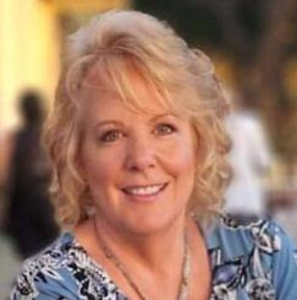 Development Strategy & Operations Lead
Growing up in Oregon, Darla learned about sustainable living from her father, who started a residential solar energy company in the 1970s. Her early career focused on network and community television, serving in roles ranging from producer and director to station manager.
After settling on Maui as a young adult, Darla held notable business leadership roles, including consulting on and managing several significant startups, providing change management and organizational revitalization services for nonprofits, private businesses, and government entities in Hawaii and across the U.S. mainland.
Darla combined her professional communication expertise and transformational cross-cultural leadership with her passion for environmental sustainability and climate resilience. Her work includes owning and operating a small organic farm, coordinating development of Maui County’s Climate Action and Resiliency Plan, serving as a government liaison in post-disaster recovery under FEMA, writing environmental grants, developing sustainability plans and educational curricula.
She earned a Master of Science in Sustainable Management, completed graduate certificate studies in Environment, Social and Governmental practices and Climate Leadership, and is a Climate Reality Leader trained through The Climate Reality Project. Darla is committed to advancing equitable, collaborative solutions that help communities, organizations, and governments build long-term environmental sustainability and climate resilience.
Dan Ruby
 Business Development Lead
Dan Ruby grew up in the Great Basin and began his career blending science, art, and education. After a stint as a touring musician, he shifted to teaching K-12 students about Earth and space science at the University of Nevada’s Fleischmann Planetarium and Science Center. He helped build hands-on career and technical education programs for high school students, later leading Scienceworks Museum when he and his family moved to Oregon in 2018.
Following the Almeda Fire in 2020, he turned to resilience efforts in housing and community health, serving as consultant to Firebrand Resiliency Collective and then as Senior Director of Partnerships for Rogue Community Health. Dan led development efforts for the Rogue Community College Foundation before running for public office, and now serves as an elected member of the Ashland School Board, as well as on the board of Future Climate Collaborative and Southern Oregon Friends of Hospice. He continues to participate in space science research and enjoys bike camping.
Candace Leeds
Advancement Strategy Lead
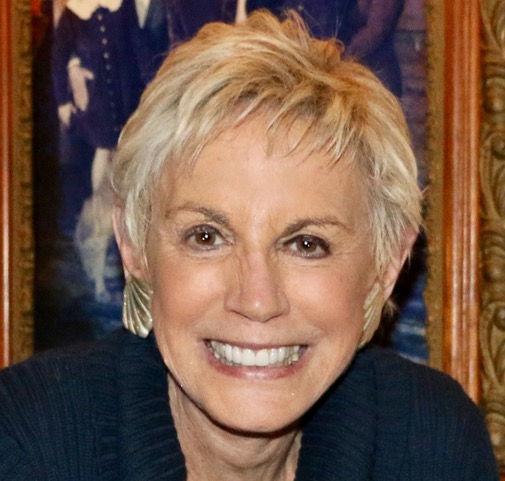
Candace Leeds (she/her) has decades of experience working in leadership roles for both corporations and non-profit organizations, specializing in branding, marketing/PR and development. Her broad background has enabled her to bring a unique perspective to her clients, helping them to build their capacity and achieve their goals.
Most recently, she has been serving as a development and marketing consultant for non-profit organizations, analyzing needs and overall strategies, working to highlight impact and awareness, and raising funds.
Candace spent four years as Director of Advancement and Donor Relations at the Parkinson’s Disease Foundation, leading Major Gifts and successfully raising six figure grants. For the past 30 years, she has served on the Board of the Ronald McDonald House of New York, working on strategic planning and marketing, and heading the Public Relations Committee. She has also generated significant publicity for Music on the Inside, another nonprofit where she serves on the Board of Directors.
Ms. Leeds spent 20 years as Vice President of Public Affairs at Loews Corporation, running PR, crisis communications, financial PR and all other media and communication issues for the multi-billion-dollar company and its top executives. She also worked alongside members of the Tisch family (founders of Loews) on their many philanthropic endeavors. During that time, she had the unique opportunity of consulting with many major charities in which they were involved, often sitting-in on Board meetings while representing the Tisch family interests. Her years dealing with the many Tisch philanthropic interests and more recent work with many charitable initiatives have given her the ability to understand the workings of many successful nonprofits. Additionally, she can anticipate the motivations of high-level donors and communicate with them in language that aligns their interests with the organization’s philanthropic aims.
Prior to Loews, Candace held leadership positions in two major PR firms: The Rowland Company, absorbed by Saatchi & Saatchi (EVP, SVP for 8 years), heading major PR campaigns for McDonald’s, DuPont, Cosmopolitan Magazine, Man Made Fiber Producers, among others; and Grey Advertising ‘s PR arm (AE, SVP, SVP for 4 years ) heading campaigns for No Nonsense Panty Hose, Johnson & Johnson, the Rainbow Room and others.
Early in her career, she segued from a professional music career to become Associate Director of the concert hall, Town Hall, where she ran public relations, solicited corporate partnerships and major donors for musical programs, and produced several widely acclaimed concerts series. She also wrote several book reviews published in the NY Daily News. She retains her interest in music, occasionally performing in cabaret settings. and writing reviews for Cabaret Scenes Magazine.
Candace joins the Geos Institute as an Encore Fellow.
Christina Mills
Deputy Director
 Christina Mills (she/they) is the Deputy Director of the Geos Institute. She currently leads the organizations data systems and communications efforts. Christina worked directly with several communities through the Geos Institute’s Climate Ready Community program and the now-closed ClimateWise consulting services, helping with community engagement efforts, project coordination, and technology needs.
Christina supported the development of a national resilience actions database and led the data collection effort of the database now hosted on NOAA’s Climate Resilience Toolkit. She also served on the National Advisory Council for the Tribal Resilience Actions Database.
Prior to joining Geos Institute, Christina was a Project Scientist at the Institute for Energy and Environmental Research providing technical analysis to support advocacy of carbon-free and nuclear-free energy systems. Publications include “Renewable Minnesota”, “Energy Efficient and Pollution-Free Space Heating and Cooling in Maryland”, and “Energy Justice in Maryland’s Residential and Renewable Energy Sectors”. They also worked as a Policy Analyst for Windustry, an organization that promotes community-based wind energy across the country.
Christina holds a J.D. from Hamline University School of Law in St. Paul, MN and a B.A. in Biology from St. Olaf College in Northfield, MN. She has a certificate in UX Design from Google.
Patricia Johnson
Finance Director
 Patricia handles all aspects of Accounting and Finance for Geos Institute. She has over 40 years of experience in bookkeeping, accounting and finance. Her work experience includes many years in the corporate finance industry and over ten years in the non-profit sector.
She has a B.A. in Business Administration from the University of Washington and is a Certified Management Accountant.
Tonya Graham
Executive Director
 Tonya Graham is the Executive Director of the Geos Institute. Over the past 17 years, she has taken a lead role in leading community-based climate resilience programs at the Institute, including leading the Institute’s team in developing the Whole Community Resilience planning framework. This framework takes a holistic approach to help communities understand and address climate change impacts, and develops solutions that are both ecologically sound and socially equitable. She and the Institute’s ClimateWise team have helped community leaders across the country understand likely future conditions, determine vulnerabilities, and develop strategies to address them that care for both people and nature.
Through these on-the-ground projects, Tonya has helped communities adapt to changing climate conditions in Oregon, California, Montana, Alaska, Texas, Kentucky, Colorado, Hawaii, and Ontario, Canada. In 2012, she co-organized with the Kresge Foundation the first national gathering of adaptation practitioners: The Practitioners Workshop on Climate Change Adaptation: Integrated Strategies for Human and Natural Communities. She has developed climate adaptation curricula for the Association of Climate Change Officers.
In 2019, she and the Geos Institute team launched Climate Ready Communities, an “assisted do-it-yourself” climate resilience planning program that provides affordable assistance to small, mid-sized, and/or under-resourced communities nationwide. She is a co-author of A Practical Guide to Building Climate Resilience, the free, step-by-step planning guide which serves as the foundation for the Climate Ready Communities program.
Tonya now leads the Geos Institute’s primary initiative – Climate Ready America. In that capacity, she convenes the National Strategy Team of partner organizations, supports in-state partners working to develop their Climate Innovation Centers, develops partnerships, and secures funding to expand the program.
Tonya is a member of FEMA’s National Advisory Council and recently served as the Vice-President of the Council’s Climate Subcommittee. She also served on the Project Advisory Committee for Community-Based Adaptation in the United States: Understanding How and Why Communities are Taking Action. Tonya is a member of the American Society of Adaptation Professionals where she has led working groups to develop climate adaptation guidance for congressional committees and incoming administrations.
Tonya served four years as a city councilor in Ashland, Oregon, where she is currently the mayor. She formerly served as the Treasurer for the Nonprofit Association of Oregon. Tonya holds a B.S. in Biophysical Environmental Studies from Northland College and a M.A. in Community Development from Goddard College.
Kim Adams
Organization and Strategy Analyst
 Kim Adams is a cutting-edge professional in the field of Living Systems workplace design. Living Systems design supports optimal employee engagement, resulting in high performance and excellent outcomes. She is a registered nurse, as well as an organizational development professional and has worked for over 12 years as a change agent in organizational and operational effectiveness. Her work brings together the insights of human systems analysis & design, Lean process efficiency, change management and importantly, human thriving. Kim’s diverse background includes work in information technology, healthcare systems, coaching, and consulting for a variety of industries and non-profits.
When not at work, you will find Kim surrounded by family, outdoors identifying birds or with her nose in a book about science, health or philosophy.
 Robert Macnee, Ph.D. is Deputy Director of Resilience Services at Climate Resilience Consulting, where he helps governments, institutions, and communities reduce climate risk in equitable and practical ways. He holds a Ph.D. in Environmental Management focused on climate change impacts on health and communities, and brings over a decade of experience spanning economic development, resilience planning, and implementation.
 Samantha Medlock is President of Climate Risk Advisors, helping communities and organizations advance equity, sustainability, and resilience. Her career began chasing floods as a local official in Texas Flash Flood Alley—a hands-on experience that still shapes her approach to climate and disaster risk management.
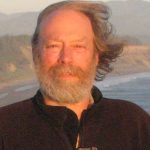 Jim is a multilingual world traveler. Based in Bavaria during the 1970s, Jim spent most of this period in India, Afghanistan and Nepal, where he founded and operated a charitable medical clinic serving Tibetan Refugees. He settled in Oregon in 1983 on a forested ranch in the Umpqua National Forest.
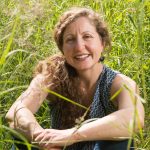 Dr. Micah Hahn is an Associate Professor of Environmental Health in the Institute for Circumpolar Health Studies at the University of Alaska-Anchorage. She received her joint PhD in Epidemiology / Environment and Resources from the University of Wisconsin-Madison and her MPH in Global Environmental Health from Emory University. Subsequently, she was a postdoctoral fellow for the CDC Climate and Health Program, and in this position worked collaboratively with the CDC Division of Vector-borne Diseases and the National Center for Atmospheric Research. Her research focuses on understanding the health impacts of climate change and working with communities to develop locally-relevant adaptation and resilience-building strategies. Dr. Hahn is also on the Management Team of the Alaska Climate Adaptation Science Center.
 Michael is a former Founding Principal of Resilient Cities Catalyst, a global non-profit helping cities and their partners tackle their toughest challenges. He is currently the Executive Director of Climate Resilience Academy at the University of Miami.
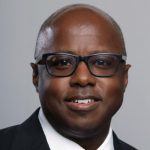 Dr. Quintus Jett is a consultant, educator, and strategist for public causes. He has a doctorate in Organizations & Management from Stanford University, and a two-decade faculty career which spans schools, departments, and programs of business, engineering, liberal studies, divinity, and public and nonprofit management. Following Hurricane Katrina in 2005, Dr. Jett launched a volunteer project in New Orleans, which enlisted residents, students from over a dozen colleges and universities, and hundreds of others to field map the city’s Gentilly district, Lower Ninth Ward, and New Orleans East. Dr. Jett is an innovator in higher education, bridging the divide between academic research and the other priorities of the modern university, including student access and diversity, community engagement, and providing foundations for life-long learning in today’s rapidly changing world.
 Scott is Monfort Professor of Atmospheric Science at Colorado State University. He has written about 100 publications in the peer-reviewed climate literature, is a former editor of the Journal of Climate, and served for five years as founding Science Chair of the North American Carbon Program.
 Linda has many years of experience in disaster preparedness and resilience. She has been an elected official on the Linn County Iowa Board of Supervisors, Chair of the Metropolitan Planning Organization, the East Central Iowa Council of Governments, the statewide Mental Health Developmental Disability and the Linn County Board of Health. Langston is a former president of the National Association of Counties (2013-2014).
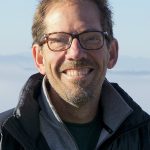 Ken works with families and organizations as a mediator, organizational consultant, trainer and facilitator. Along with his passion for helping people prepare for and reduce climate change, Ken also volunteers as a mediator through Mediation Works and is passionate about supporting youth through mentoring with Boys to Men of Southern Oregon.
 Matthew is a retired high school teacher who was once honored as Oregon High School Social Studies Teacher of the Year. Before his teaching career he was in the restaurant business in Portland. He is also a lawyer who has been a member of the Oregon State Bar Association since 1980.
 Andrea is the Resilience Policy Advisor for the North Carolina Office of Recovery and Resiliency. She works across state agencies and with local governments to increase the state’s resilience to the impacts of climate change.